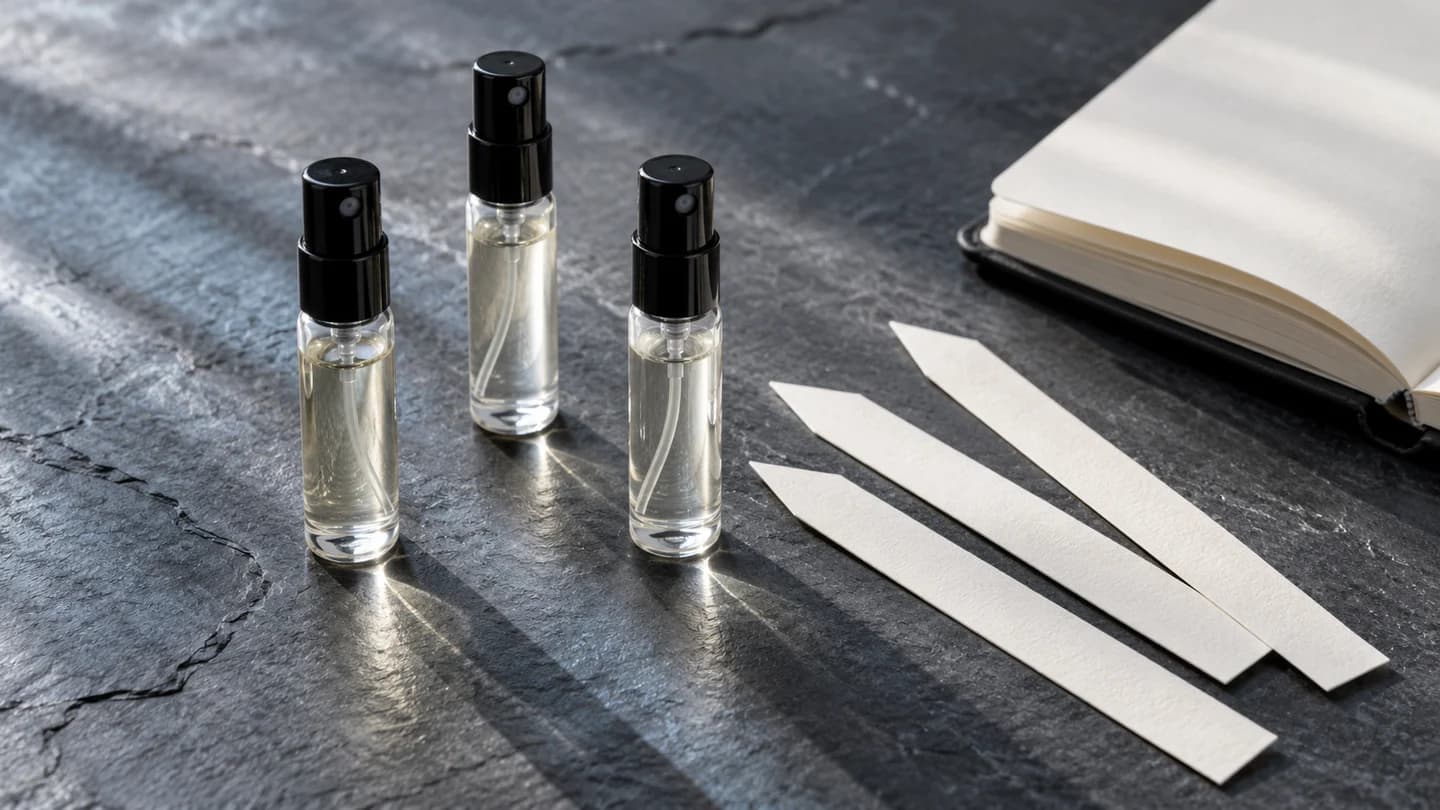
A vocabulary for something invisible
A note list gives you a way into a fragrance. You might recognise the brightness of bergamot, the softness of a floral impression or the warmth you associate with wood. Those familiar words make it easier to describe an experience that is otherwise difficult to put into language.
But the names are descriptions of scent, not a recipe. A fragrance can suggest a material without containing that material itself. An accord is a combination that creates a recognisable impression. Reading “leather” tells you something about the intended smell; it does not tell you that leather is an ingredient.
Read for clues, not conclusions
Use the listed notes to form a question: is this a floral fragrance with a crisp opening, or a woody fragrance with a floral detail? Then keep the question open. Two perfumes can share several named notes and still feel very different as complete compositions.
On Scentolio, note pages help you explore those connections. A shared note is a useful route to discovery, but it is not a promise that two fragrances smell alike. Community reviews can add a different kind of information: what someone noticed while actually wearing the fragrance.
Leave room for your own impression
When you try a fragrance, write down your first impression before returning to the note list. Use ordinary words if they fit: bright, dry, soft, sweet, airy or dense. You do not need to identify every material to describe what you experience.
Return to your notes later in the wear and notice what has changed. If a published note does not stand out to you, that does not make your experience wrong. The most useful review describes the fragrance you perceived, rather than repeating its product description.
AI-generated editorial illustration for Scentolio.